Last updated November 17, 2026






Free in-home design visit - walk-in showers, tub-to-shower conversions, and Kohler, Moen, and Delta fixtures planned to your exact space
Bathroom Remodeling Warning Signs: A Henderson Homeowner’s Reference Guide
A grout crack that reappears every six months isn’t a grout problem. It’s your subfloor moving, and by the time most Henderson homeowners figure that out, the tile, the backer board, and sometimes the subfloor itself are already coming out. The same goes for that soft spot beside the toilet base and the musty smell that lingers even with the fan running. These look cosmetic. They’re usually not. This guide walks you through the specific visual and tactile tests you can run yourself, the Henderson-specific signs that push a bathroom from “watch it” to “open the wall,” and how to sort what you find by urgency so you’re not guessing.
Quick Answer
The warning signs that matter most in a Henderson bathroom are the ones that keep coming back: recurring grout cracks in the same line, a floor that gives slightly underfoot near the toilet or shower pan, a musty smell that survives a good fan, and mineral buildup that has gone hard and chalky rather than soft and wipeable. Those point to active waterproofing or structural failure, not surface wear. Soft, chalky mineral film and dulled grout are cosmetic. Cracks that reopen after repair, spongy flooring, and a smell that won’t clear are the ones you want looked at before the next remodel season.
Styles & brands we work with
- Walk-in shower
- Tub-to-shower
- Freestanding tub
- Kohler
- Moen
- Delta
- Frameless glass
Table of Contents
- Cosmetic Wear vs. Active Waterproofing Failure: How to Tell the Difference
- Hard Water Warning Signs Specific to Henderson
- The Soft-Floor Test: Checking for Subfloor Damage Before You Open Walls
- Ventilation Signs That Predict Mold Before Monsoon Season
- Why Grout Keeps Cracking in the Same Place
- Shower Pan and Tub Surround Red Flags
- Triaging Warning Signs by Urgency
- When a Warning Sign Means Remodel and When It Means Repair
Cosmetic Wear vs. Active Waterproofing Failure: How to Tell the Difference
Most bathroom damage you can see is cosmetic. Most bathroom damage you can’t see started as waterproofing failure. The trick is separating the two without tearing anything apart, and you can do a lot of that with your eyes and your hands in about fifteen minutes.
Start with the visual check. Cosmetic wear looks like this: grout that has gone a shade or two darker than when it was installed, caulk lines that have yellowed at the tub edge, a glaze on older tile that has dulled or scratched. None of that means water is getting where it shouldn’t. Active failure looks different. You’re looking for dark staining that spreads outward from a grout line, efflorescence (a white, powdery crust that keeps returning after you clean it), bubbling or peeling paint on the wall behind the shower, or a baseboard that has swelled and pulled away from the wall on the other side of the bathroom.
Then do the tactile check. Run your fingertips along the caulk line where the tub or shower pan meets the wall. It should feel firm and slightly rubbery. If it crumbles, peels away in strips, or feels soft underneath, water has been getting behind it. Press the drywall or tile near the shower with your thumb. Solid backer board doesn’t flex. If you feel movement, the substrate has already been compromised.
The last test is the smell test, and it’s more reliable than people think. A bathroom that smells musty even after the fan has run for twenty minutes is telling you moisture is trapped somewhere it shouldn’t be. In our experience, that’s the single most overlooked sign in a Henderson bathroom, because the air is dry most of the year and homeowners assume a smell like that can’t be coming from moisture. It usually is.
- Cosmetic: dulled grout color, yellowed caulk, scratched tile glaze, soft white mineral film that wipes off
- Active failure: staining that spreads, recurring efflorescence, bubbling paint behind tile, swollen baseboards, crumbling caulk, flexing substrate, persistent musty smell
Hard Water Warning Signs Specific to Henderson
Henderson’s water is hard, and over time that hardness leaves its mark on every fixture and tile surface in the bathroom. Most of that is an aesthetic nuisance. The line between nuisance and mechanical failure is where mineral buildup has gone from a soft film you can wipe away to a hard, chalky crust that has started to block, seize, or eat into the hardware itself.
Here’s how to tell which stage you’re in. Soft mineral film wipes off with a damp cloth or a mild vinegar solution. It comes back, but it doesn’t damage anything. Hard scale feels like sandpaper under your fingertip and doesn’t budge without a scraper or a descaling product. When scale reaches that stage, it’s no longer just a cleaning problem. It’s building up inside the showerhead, around the cartridge in the faucet, and along the base of the toilet where the supply line connects.
What that looks like in practical terms:
- A showerhead that sprays unevenly or has visibly narrowed streams, which means scale is blocking the nozzles
- A faucet handle that feels stiff or requires extra force to turn, which usually means scale has built up on the cartridge
- White crust around the base of the toilet or under the supply valve, which can mean a slow seep is combining with mineral deposits
- Etched or cloudy glass on a shower enclosure that won’t clear with normal cleaning, which means the minerals have begun to pit the surface
- Scale rings inside the toilet bowl that return within weeks of cleaning, which points to chronic hardness rather than a one-time stain
The reason this matters for a remodeling decision is that severe scale often means the fixture itself has reached the end of its useful life. If you’re replacing a showerhead, a faucet, or a toilet because the hardware has seized or the finish has been eaten away, that’s a strong signal your bathroom is due for a fixture refresh. When that happens, it makes sense to look at professional-grade lines rather than another builder-grade replacement that will scale up the same way. We work with brands like Kohler and Grohe, which hold up well against Henderson’s water, and we’ll help you match the fixture to your budget and style instead of steering you toward one catalog.
The Soft-Floor Test: Checking for Subfloor Damage Before You Open Walls
Subfloor damage around a toilet or shower pan is the single most expensive warning sign to ignore, because it’s the one that quietly spreads under the tile you can see. The good news is that a simple floor test can tell you a lot before anyone touches a wall.
Here’s the sequence:
- Walk the perimeter of the toilet base barefoot. Press your weight down at four points around the base, roughly a foot out. You’re feeling for any give, sponginess, or a slight dip that wasn’t there before. A solid subfloor doesn’t flex at all.
- Rock the toilet gently side to side with your hands on the tank, not the seat. A toilet that rocks is usually a toilet with a compromised flange or a soft floor underneath. Don’t force it; just feel for movement.
- Check the shower pan or tub surround the same way. Step into the shower and shift your weight from heel to toe across the floor. Any springiness or hollow sound is a signal.
- Look for staining at the base of the toilet and along the shower curb. Dark rings, swollen caulk, or a baseboard that has pulled away on the adjacent wall all point to moisture that has been sitting for a while.
- Check the ceiling below, if you have a bathroom over a finished space. A faint water stain or a soft spot on the ceiling below is one of the clearest indicators that the shower pan has failed.
If you find movement in any of those spots, the right next step is not to keep testing. It’s to have someone look at it, because continuing to walk on a soft subfloor, or continuing to use a shower with a failed pan, accelerates the damage under the tile. Once the subfloor is saturated, the repair grows from a tile and backer board job into a framing and subfloor replacement. That’s the exponential jump. It’s also the reason we put Schluter Systems waterproofing at the center of every shower we build: the detail that separates a remodel that lasts from one that leaks is the waterproofing layer under the tile, not the tile itself.
Ventilation Signs That Predict Mold Before Monsoon Season
Henderson is dry most of the year, which makes it easy to assume a bathroom fan doesn’t matter much. Then the monsoon months arrive, outdoor humidity climbs, and a bathroom that was never ventilating properly becomes a mold problem in a matter of weeks. The warning signs are there long before you see any mold, if you know what to look for.
The most common ventilation red flags in a Henderson bathroom:
- Mirror fog that lingers more than a few minutes after a shower. A properly ventilated bathroom clears within a few minutes. If the mirror is still fogged after ten, the fan isn’t moving enough air.
- Condensation on the walls or window after a shower. Beaded water on surfaces that should be dry is a sign the fan is undersized or blocked.
- A fan you can barely hear. Quiet is nice. Silent is a problem. A fan that’s too quiet is often a fan that isn’t actually pulling air.
- Dust and lint collecting on the fan grille. That’s a sign the fan is running but restricted, and restricted airflow is almost as bad as no airflow.
- Peeling paint or bubbling drywall near the shower ceiling. This usually means moisture has been sitting on the surface long enough to work into the finish.
As for what adequate ventilation actually looks like in this climate: the fan needs to be sized to the bathroom’s square footage and ducted to the outside, not into the attic. A fan ducted into the attic does nothing in a dry climate most of the year, then dumps moisture into the attic during monsoon season. If you’re remodeling, that’s the moment to get the ducting right. If your existing fan is undersized, replacing it is one of the least expensive proactive fixes you can make in a Henderson bathroom, and it’s the one that most directly prevents a mold problem in August.
Why Grout Keeps Cracking in the Same Place
Grout that cracks once and stays repaired is not a problem. Grout that cracks in the same line every six months after you re-grout it is a symptom, and the symptom is movement. Something underneath is flexing, and the grout is the first thing to give.
There are four common reasons grout keeps cracking in the same spot:
- Subfloor deflection. The floor joists aren’t stiff enough for the tile span, so every time someone steps on the floor, the tile and grout flex slightly. Over time, the grout gives at the weakest line.
- Missing or inadequate backer board. Tile installed directly over plywood or over a backer board that wasn’t properly bedded will crack as the substrate moves.
- Improperly spaced expansion joints. Tile and grout need room to move with temperature and humidity changes. In Henderson, where indoor humidity swings in the summer, that matters more than people realize.
- Water getting behind the tile. Once water reaches the backer board, the board can swell or soften, which changes the movement profile under the tile and cracks the grout from underneath.
The diagnostic move is simple: when you re-grout a crack and it comes back within a few months, stop re-grouting and start looking underneath. A grout crack that returns in the same line is a standing invitation to have someone look at the substrate, because each re-grout cycle is money spent on a symptom while the cause keeps working. We see this pattern in older Henderson bathrooms frequently, and it’s one of the clearest early signs that a full bathroom remodeling is worth planning rather than patching.
Shower Pan and Tub Surround Red Flags
The shower pan is the part of the bathroom most likely to fail silently. It’s under the tile, out of sight, and by the time the damage shows up in the bathroom, it’s usually already reached the subfloor or the ceiling below. The tub surround has its own set of signals, and both are worth checking once a season.
For a shower pan, watch for these:
- Caulk that keeps failing at the pan-to-wall joint. If you’ve re-caulked the same seam three times and it keeps peeling, water is getting behind it and pushing it off.
- A drain that feels loose or moves slightly when you step near it. That usually means the pan has shifted or the drain connection has degraded.
- Cracks in the pan itself, even hairline ones. A hairline crack in a fiberglass or acrylic pan lets water through with every shower.
- A persistent musty smell that concentrates near the shower. If the smell is worse right after a shower and fades over the day, the pan is the likely source.
For a tub surround, the red flags are similar but show up higher. Loose or hollow-sounding tile, grout that has gone dark along the walls, and a tub edge where the caulk has separated and stayed separated after re-caulking all point to water behind the surround. If your tub surround is original to an older Henderson home, the odds are good that the waterproofing behind it was never done the way we’d do it today. That’s the point where a tub-to-shower conversion often makes more sense than re-tiling over a compromised substrate, especially if accessibility or a more open layout is part of the goal.
Whether you’re looking at a conversion or a new walk in shower, the waterproofing detail is the thing that determines whether the job lasts. Tile is the finish. Waterproofing is the work.
Triaging Warning Signs by Urgency
Not every warning sign needs attention this week. Sorting what you find into three buckets keeps you from panicking over cosmetic wear and from sitting on real damage.
Bucket one: address this week. These are the signs that indicate active water intrusion or structural movement. A soft floor anywhere in the bathroom. A shower pan with a crack or a shifting drain. A ceiling stain below the bathroom. Caulk that peels off in strips at the tub or shower joint. A musty smell that won’t clear. Any of these warrant a call now, because every week of continued use makes the eventual repair larger.
Bucket two: plan within the year. These are the warning signs that point to a system nearing the end of its life but not failing outright. Recurring grout cracks in the same line. A showerhead that’s scaled solid. A fan that’s undersized or ducted wrong. White crust around fixtures that keeps returning. These are remodel triggers, not emergency calls, but they’re also not things to put off indefinitely.
Bucket three: cosmetic, track it. Dulled grout color. Yellowed caulk. Soft mineral film. A scratched tile glaze. These are the signs you can note in a running list and address at the next planned remodel. Replacing them piecemeal usually costs more in the long run than doing it once, correctly, as part of a broader project.
If you’re not sure which bucket a sign belongs in, that’s the moment to ask. We answer 24/7 and can help you sort a warning sign into the right urgency level before it turns into a bigger project. Call (833) 954-6011, or read more about Bathroom Remodeling Henderson to see how we approach a project once you’re ready to plan one.
When a Warning Sign Means Remodel and When It Means Repair
The hardest part of dealing with bathroom warning signs is knowing whether you’re looking at a repair or the early stage of a remodel. Most of the time, the answer is decided by how many systems are involved. One failing component is a repair. Two or more are a remodel conversation.
Here’s the practical way to think about it. If the only problem is a scaled showerhead, replace the showerhead and consider a water softener discussion. If the only problem is a cracked piece of grout with no recurrence, re-grout it. But if the grout keeps cracking, the floor gives near the toilet, and the fan is undersized, you’re no longer looking at three separate repairs. You’re looking at a bathroom where the waterproofing, the substrate, and the ventilation all need attention, and doing them together is less expensive and less disruptive than doing them one at a time over several years.
That decision point is also where the brand question comes in. When you’re replacing fixtures as part of a larger project, you have the chance to choose from a broader range than a single supplier might offer. We carry access to eight professional lines, from American Standard and Sterling on the workhorse end to Toto and Grohe at the premium tier, so the fixture matches what you actually want rather than what’s sitting in one catalog. For a bathroom where hard water has already eaten through a builder-grade finish, that upgrade tends to pay off.
If you’re in the middle of this decision, it helps to talk it through with someone who works on bathrooms every day rather than a generalist who handles them occasionally. Our technicians have up to 10 years of experience, and we work in one trade, so the guidance you get is grounded in bathrooms specifically. You can start that conversation by visiting our Henderson page or by calling for a free estimate.
Common Mistakes to Avoid
- Re-grouting a crack without finding the cause. Repeated re-grouting in the same line is money spent on a symptom. Find out why it’s cracking before you touch the grout again.
- Assuming a musty smell is a cleaning problem. In Henderson’s dry climate, a smell that won’t clear usually means trapped moisture, not a missed scrub. Track where the smell concentrates before you dismiss it.
- Ignoring the ceiling below the bathroom. A water stain on the ceiling below a second-floor bathroom is one of the clearest shower pan failure signals, and it’s the one most homeowners never think to check.
- Venting a bathroom fan into the attic. This is common in older Henderson homes and does nothing most of the year, then dumps moisture into the attic during monsoon season. Check where the duct actually terminates.
- Replacing a fixture without addressing the underlying hardness. A new showerhead will scale up the same way if the mineral issue isn’t part of the conversation. Choose hardware that holds up against Henderson’s water.
- Treating a soft floor as cosmetic. A floor that gives near the toilet or shower pan is a structural warning, not a wear item. Continued use makes the eventual repair larger.
- Calling a generalist for a bathroom-specific diagnosis. A contractor who does roofs, kitchens, and bathrooms is looking at your bathroom through a broader lens. A bathroom specialist will recognize the warning signs that point to waterproofing and substrate failure faster.
See the difference
 Before
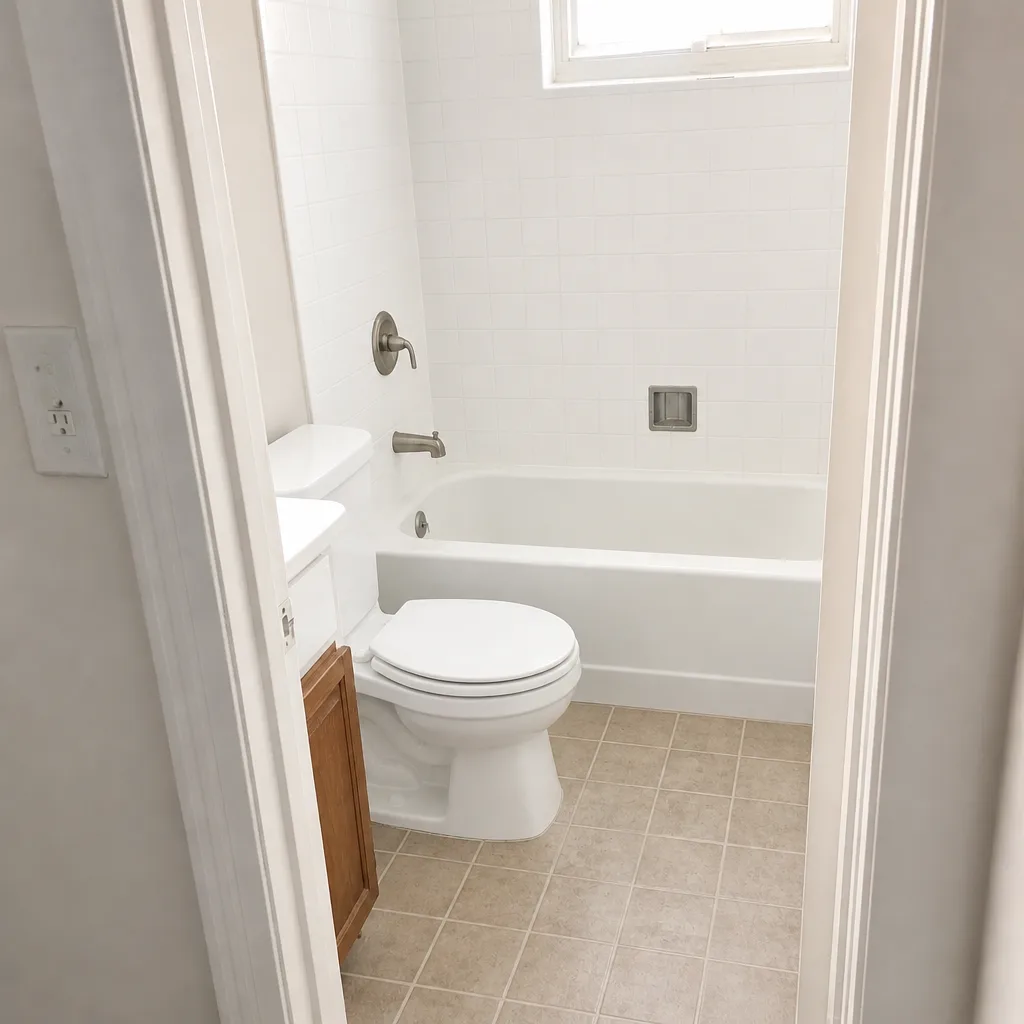 After
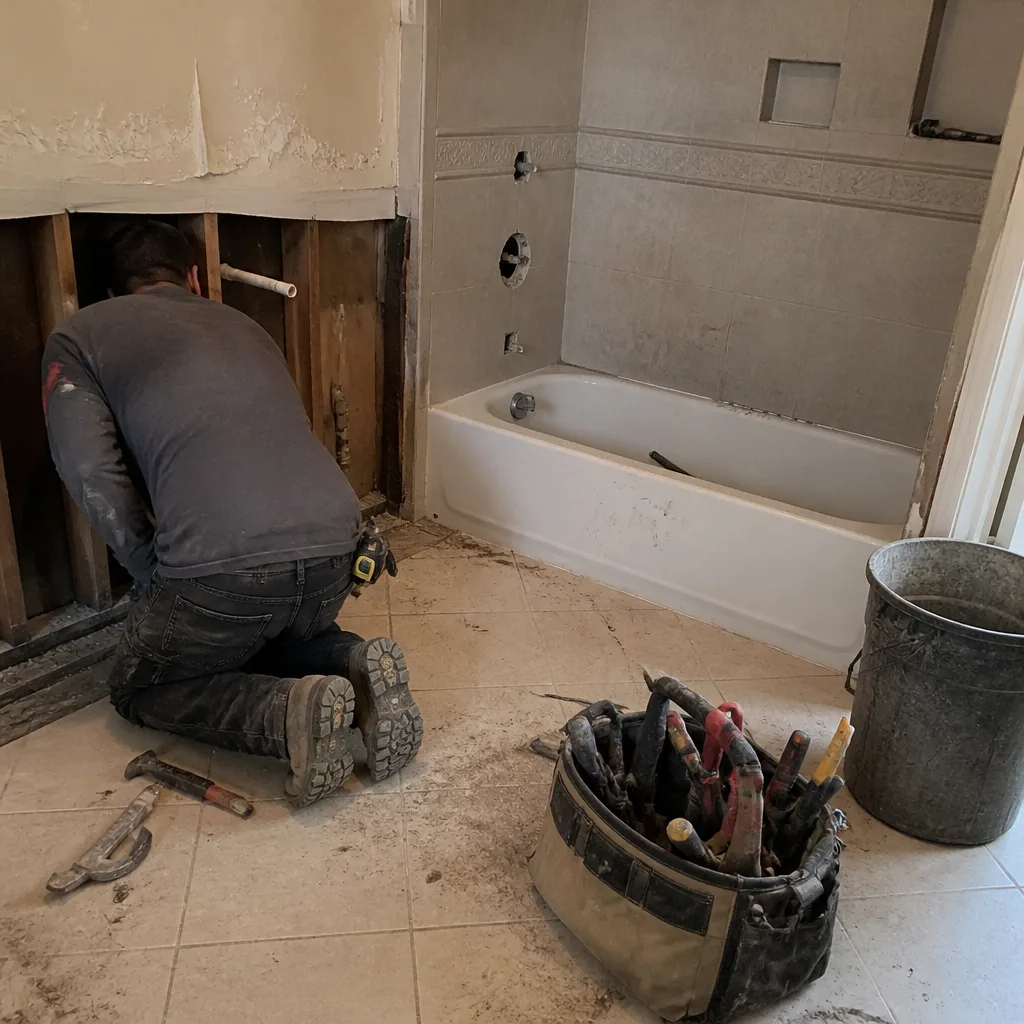 Before
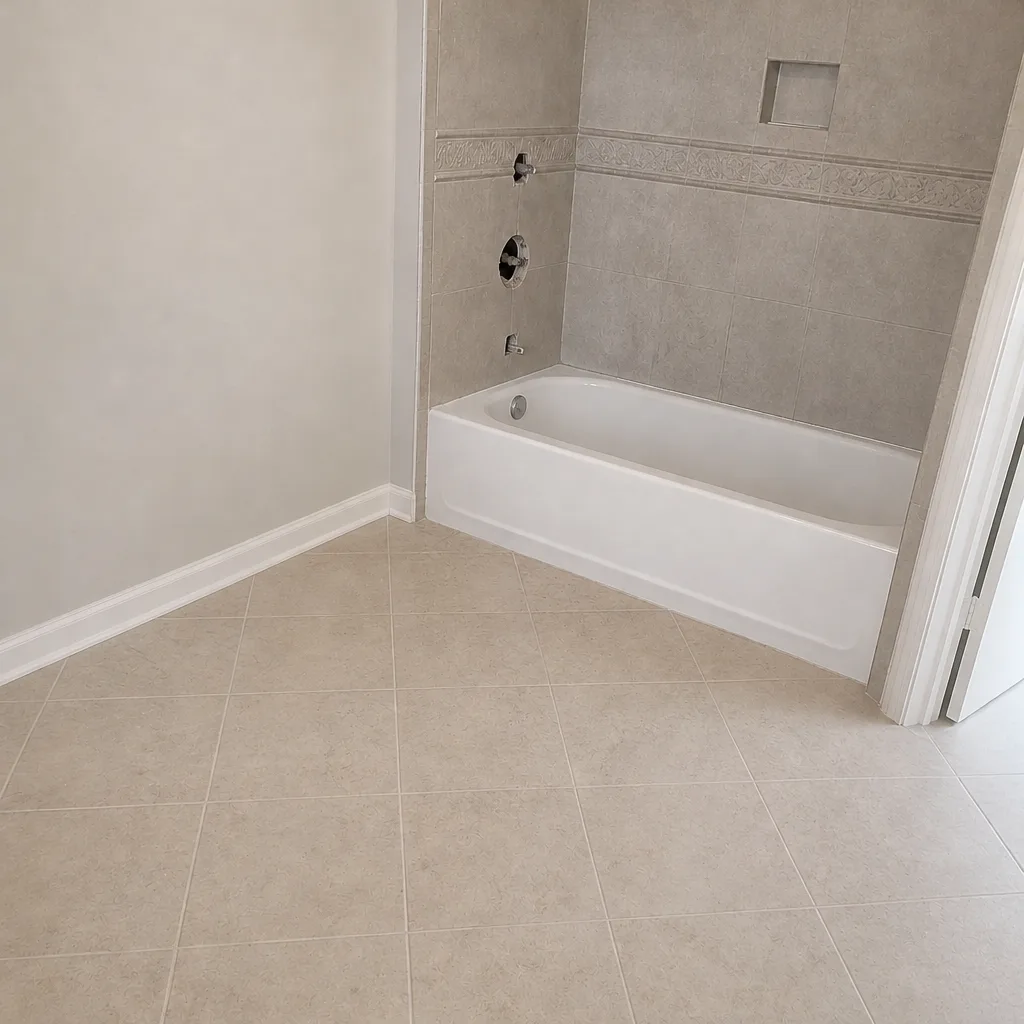 After
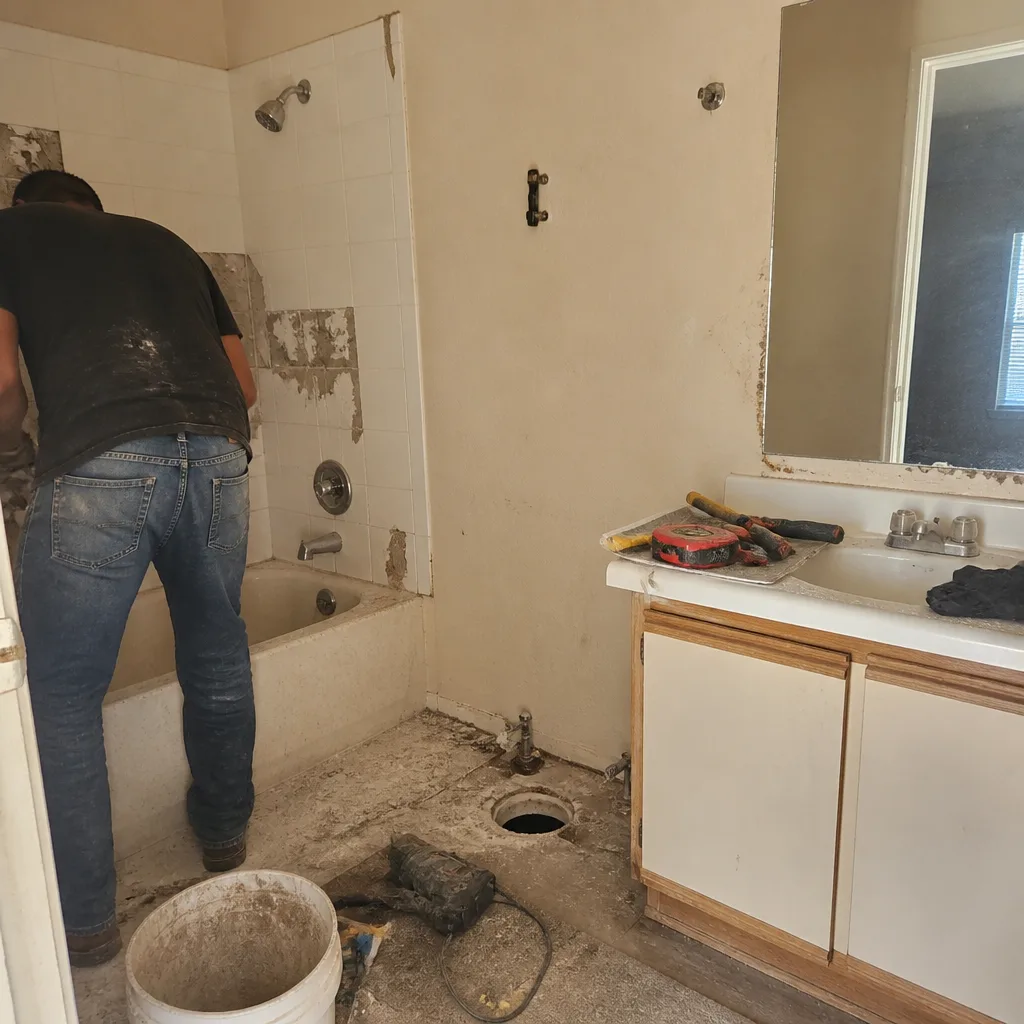 Before
 After
When to Call a Professional
Call when you can’t tell whether a sign is cosmetic or structural, and call sooner if you’ve found more than one. A soft floor near the toilet, a shower pan that has cracked or shifted, caulk that keeps peeling at the same joint, a musty smell that survives a good fan, and a ceiling stain below the bathroom are all signs that warrant a look this week rather than next season. If the signs are milder (recurring grout cracks, a scaled showerhead, an undersized fan), they’re worth putting on a planning list for a remodel rather than a repair. Bathroom Remodeling Henderson offers free estimates in Henderson. Call (833) 954-6011.
Frequently Asked Questions

A soft or spongy floor near the toilet or shower pan is the most serious warning sign, because it usually means the subfloor is already compromised and the damage is spreading under the tile. A ceiling stain below the bathroom is the other one that deserves immediate attention. Both point to water where it shouldn’t be. Call (833) 954-6011 for an exact quote; estimates are free.
Check four things: caulk at the pan-to-wall joint that keeps peeling after re-caulking, a drain that moves slightly when you step near it, a hairline crack in the pan itself, and a musty smell that concentrates near the shower and fades over the day. If two or more of those are present, the pan should be looked at by a professional. Call (833) 954-6011 to schedule a free estimate.
Grout that cracks in the same line repeatedly usually means the substrate underneath is moving, not that the grout itself is defective. Common causes are subfloor deflection, missing or improperly installed backer board, missing expansion joints, or water getting behind the tile. Re-grouting without addressing the cause just repeats the cycle. Call (833) 954-6011 for an exact quote; estimates are free.
Not always, but it usually means moisture is trapped somewhere it shouldn’t be, and mold is a likely outcome if it isn’t addressed. In Henderson, the dry air most of the year makes a persistent smell easy to dismiss, but the source is often a shower pan, a caulk joint, or a fan that isn’t moving enough air. Have it looked at before monsoon season. Call (833) 954-6011 to schedule a free estimate.
Adequate ventilation means the fan is sized to the bathroom’s square footage and ducted to the outside, not into the attic. Signs your fan is undersized include a mirror that stays fogged more than a few minutes after a shower, condensation on walls or windows, and a fan you can barely hear running. A fan ducted into the attic does nothing most of the year and adds moisture during monsoon season. Call (833) 954-6011 for guidance on what your bathroom needs.
When two or more systems are involved, a remodel usually makes more sense than piecemeal repairs. Recurring grout cracks plus a soft floor plus an undersized fan is a remodel conversation, not three separate repair calls. One isolated, non-recurring issue is usually a repair. Call (833) 954-6011 for an exact quote; estimates are free.
The Bottom Line
The warning signs that matter in a Henderson bathroom are the ones that keep coming back: grout cracks in the same line, a floor that gives near the toilet or shower pan, a musty smell that survives a good fan, and mineral buildup that has gone hard and chalky rather than soft. Those point to active waterproofing or structural failure, not surface wear. Sort what you find by urgency, act quickly on anything structural, and plan the rest into a remodel rather than patching it piece by piece. When you’re ready to talk it through, call (833) 954-6011. We answer 24/7. Fast dispatch from 7am to 7pm, Sunday through Friday.
Written by the team at Bathroom Remodeling Henderson.