
Last updated November 17, 2026




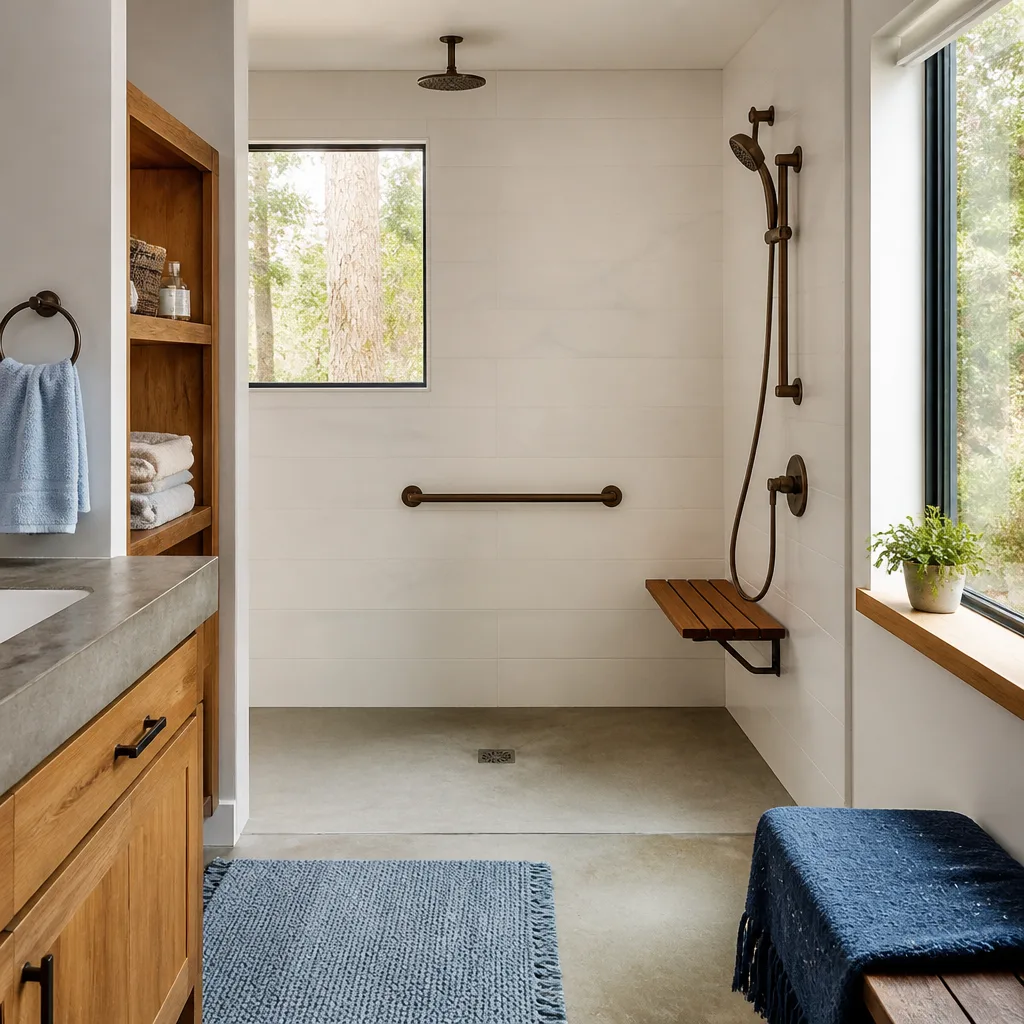



Free in-home design visit - walk-in showers, tub-to-shower conversions, and Kohler, Moen, and Delta fixtures planned to your exact space
Bathroom Remodeling Troubleshooting in Henderson: Common Problems and How to Fix Them
Most bathroom problems that show up six months after a remodel aren’t bad luck. They’re the predictable result of steps that got skipped, and in Henderson those skips show up faster than almost anywhere else. Our local water regularly tests above 300 mg/L of hardness, close to triple the threshold where water is considered “hard,” and summer temperatures push past 110°F for weeks at a time. That combination attacks grout, caulk, and fixture finishes in ways that generic troubleshooting guides never mention. This guide walks through the problems we see most often in Henderson bathrooms, how to tell them apart, and which ones you can handle yourself versus which ones need a pro.
Quick Answer
The most common bathroom remodel problems in Henderson are grout haze and crumbling grout lines, cracked or moldy caulk joints, tile lippage, shower leaks at the pan or curb, and mold from undersized exhaust fans. Almost all of them trace back to one of three root causes: waterproofing that wasn’t done correctly, materials that can’t handle Henderson’s hard water and heat, or ventilation that’s too weak for the length of showers people actually take. Fixing them properly means addressing the cause, not just re-caulking over it.
Styles & brands we work with
- Walk-in shower
- Tub-to-shower
- Freestanding tub
- Kohler
- Moen
- Delta
- Frameless glass
Table of Contents
- Why Henderson’s Hard Water Attacks Grout and Caulk
- Tile Lippage and Cracked Grout: Substrate or Installation?
- Shower Leaks: Pan vs. Curb vs. Behind the Wall
- Exhaust Fan Undersizing and the Mold It Causes
- Fixture Failures: When It’s the Brand and When It’s the Water
- Warranty Callback vs. Normal Wear: How to Tell
- Common Mistakes to Avoid
- When to Call a Professional
Why Henderson’s Hard Water Attacks Grout and Caulk
Henderson’s water is among the hardest in the country, and it behaves like a slow abrasive on every surface it touches. Cement-based grout is porous by nature. When hard water sits in those pores and evaporates, it leaves calcium and magnesium deposits behind, and over time those deposits stain the grout, dull its color, and weaken the bond. Caulk fares worse. The minerals dry out the sealant and cause it to shrink, crack, and pull away from the tile edge. Once that happens, water gets behind the caulk line and the problem compounds.
What makes this hard to fix after the fact is that most installers use whatever sealer came with the job. In Henderson, that’s usually not enough. A penetrating sealer rated for high-mineral water needs to be reapplied on a schedule, and the joint material itself matters more than the sealer. Here’s what actually holds up in this water chemistry:
- Epoxy grout instead of cement-based grout in wet areas. It’s non-porous, so minerals can’t penetrate it, and it doesn’t need resealing.
- 100% silicone caulk, not siliconized acrylic, at every change of plane: where the wall meets the floor, where tile meets the tub or shower pan, and around the shower valve trim.
- Penetrating sealers formulated for hard water on any cement grout that does get used, reapplied as the manufacturer specifies rather than once and forgotten.
- Regular squeegee and towel-dry habits after every shower. It sounds trivial, but in Henderson it’s the difference between grout that lasts and grout that hazes over in a year.
If your grout is already hazy and the caulk lines are cracked, the fix isn’t another coat of sealer over the top. The failed material needs to come out, the joints need to be cleaned and dried completely, and the right material needs to go back in. That’s the kind of detail a bathroom-only remodeler plans for from day one, and it’s why Schluter Systems waterproofing and tile-edge products matter so much on a Bathroom Remodeling Henderson project. The system underneath the tile is what keeps hard water from finding its way into the wall assembly.
Tile Lippage and Cracked Grout: Substrate or Installation?
Tile lippage is when one tile edge sits higher than its neighbor, creating a ridge you can feel with your hand. In Henderson, lippage and grout cracks often get blamed on the installer when the real culprit is the substrate moving underneath. Desert temperature swings push and pull on a house’s framing, and if the subfloor or wall board wasn’t properly prepped or secured, that movement transfers straight into the tile layer. Grout has almost no flexibility, so it cracks along the stress lines.
Diagnosing which one you have takes a few simple checks:
- The coin tap test. Tap a coin across the tile and along the grout lines. A hollow, hollow-drift sound means the tile has debonded from the substrate. That’s a substrate or installation problem, not normal wear.
- Check where the cracks run. Cracks that follow a straight line across the floor, especially over a seam in the subfloor, usually mean deflection. Cracks that appear randomly at tile corners are more likely installation error or grout mix problems.
- Look at the floor’s flex. Step firmly near the center of the room. If there’s any noticeable give or bounce, the subfloor is undersized for tile and no grout product will hold up long-term.
- Watch the seasons. If cracks reappear in the same place every spring and fall, temperature-driven movement is the driver and the fix is a movement joint, not more grout.
Lippage that’s within the tile manufacturer’s tolerance is cosmetic but normal. Lippage you can feel with a bare foot, or lippage combined with hollow-sounding tiles, is a callback. The repair isn’t always a full tear-out. Sometimes the affected tiles can be lifted, the substrate corrected, and the floor reset. But if the deflection is structural, patching over it just buys you another crack in a year. Our technicians have up to 10 years of experience reading exactly this kind of symptom pattern, and it’s the single most common thing we’re called back to assess.
Shower Leaks: Pan vs. Curb vs. Behind the Wall
A shower leak in Henderson can come from three very different places, and the repair is different for each. Knowing which one you have lets you describe the problem precisely when you call, which saves everyone time and usually saves you money. Water is a patient traveler, so where the leak shows up is often not where it started.
Leak at the pan
A pan leak shows up as water staining on the ceiling below the shower, a soft spot in the floor outside the shower door, or a musty smell that never goes away. It usually means the pan liner was installed incorrectly or punctured during the tile installation, or the drain connection wasn’t sealed properly. Pan leaks are the most serious of the three because the water sits in the substrate and breeds mold before it ever becomes visible.
Leak at the curb
Curb leaks show up as damp or discolored baseboards on the wall adjacent to the shower, water pooling under the shower door track, or efflorescence (a white powdery deposit) on the outside of the curb. The curb is the most common failure point in a tiled shower because it gets the most water exposure and the most physical stress. The curb must be solid, waterproofed continuously with the pan, and the top must slope slightly inward. If the curb was built from stacked 2x4s with cement board screwed over it, the screw holes are potential leak paths.
Leak behind the wall
A leak behind the wall usually announces itself through the wall on the opposite side, or as a wet spot on the ceiling below the shower’s plumbing wall. The causes are typically a failed shower valve, a cracked pipe joint, or a missing waterproofing membrane behind the tile. This is the hardest type to diagnose without opening the wall, and the most expensive to ignore.
If you’re not sure which one you have, one reliable test is to tape a plastic sheet over the shower drain, fill the pan with an inch of water, and watch the ceiling below for several hours. If water appears, it’s a pan or curb problem. If it doesn’t, the leak is in the plumbing or behind the wall. That test alone tells any contractor where to start looking.
Exhaust Fan Undersizing and the Mold It Causes in Desert Homes
It seems counterintuitive in a desert city, but Henderson bathrooms grow mold more often than people expect. The reason isn’t the outdoor climate. It’s the shower. A long hot shower puts a lot of moisture into a small room, and if the exhaust fan can’t clear it fast enough, that moisture condenses on cool surfaces: the mirror, the paint, the grout, the ceiling. Henderson homes tend to over-insulate and seal tightly to keep the heat out, which makes the problem worse because there’s nowhere for the humidity to go.
The signs of an undersized fan are easy to recognize once you know what to look for:
- Mirrors still fogged five minutes after a shower
- Paint peeling or blistering near the ceiling or on the wall opposite the shower
- A persistent musty smell that doesn’t go away
- Condensation dripping from the ceiling or the vent grille
- Dark spots appearing in grout lines, especially near the shower curb and floor corners
Fixing this starts with matching fan capacity to bathroom size and the length of typical showers. A small fan with an underpowered motor runs quietly but does nothing. A correctly sized fan with a real humidity rating and a properly ducted exhaust to the exterior solves the problem permanently. Ducts that terminate in the attic instead of outside are a common shortcut and a common cause of moisture damage in Henderson attics. If your fan has ever run but the bathroom still smells damp afterward, the ducting is the first thing to check. Whatever else you fix in the bathroom, sorting out a bathroom remodeling project without addressing ventilation means repeating the problem. That’s a core part of how we approach any bathroom remodeling scope.
Fixture Failures: When It’s the Brand and When It’s the Water
Not every drippy faucet or cloudy showerhead is a defective product. In Henderson’s water, a lot of “fixture failures” are actually mineral problems. Recognizing the difference tells you whether to call for service or reach for a cleaning solution. And the fixture brands you choose during a remodel matter for how well the finish holds up over time.
Signs it’s the water
- White crust building up around aerators and showerhead nozzles
- Reduced flow that improves after soaking the aerator in vinegar
- Spots and film that reappear quickly after cleaning
- Cartridge binding or stiff handles, from mineral deposits inside the valve
Signs it’s the fixture
- A consistent drip from a faucet that has already been serviced
- A shower valve that won’t hold temperature
- Corrosion or peeling finish on the faucet body itself
- A running or leaking toilet that persists after a flapper or fill valve replacement
The fixture brands that hold up best in Henderson tend to be the ones with solid brass valve bodies and ceramic cartridges. Among the lines we work with, Kohler and Grohe both offer premium tiers with those construction details, and Moen and Delta have solid mid-range options that do well in high-mineral water. High-end finish choices, like brushed gold or matte black, wear differently: the finish itself is a coating, and in a hard-water household it benefits from regular towel-drying even more than the chrome versions do. That’s worth knowing before the remodel, not after.
If you’re choosing fixtures as part of a larger upgrade, our fixtures guide walks through the tier differences. A bathroom that’s built to last in this water starts with the right fixtures, not just the right finish.
Warranty Callback vs. Normal Wear: How to Tell
Not every change in your bathroom is a contractor’s responsibility. Knowing the line between normal wear and a genuine callback saves you a frustrating phone call and protects your relationship with your remodeler. Normal wear is things like a slightly dulled sealant that just needs a refresh, a showerhead that needs descaling, or grout that darkens a shade as it ages. Those are maintenance, not failures.
A legitimate warranty callback is a problem that shouldn’t exist given a correct installation and the age of your remodel. Use this framework:
- Time since the remodel. Problems within the first year that involve grout cracking, tile debonding, or visible leaks almost always deserve a callback. Problems after several years with the same symptom are usually wear.
- Location and pattern. A grout crack running across the floor in a straight line is a callback. A few pinhole cracks near the shower entry after three years of use are wear.
- Type of failure. Water appearing on the ceiling below the shower is always a callback. A fan that’s gotten noisier with age is wear.
- Fixture performance. A shower valve that never held temperature is a callback. A showerhead with reduced flow from mineral buildup is maintenance.
- Original documentation. Keep the written estimate and any warranty language on file. It’s the difference between a conversation and a dispute.
For Henderson homeowners specifically, hard water means the “wear” timeline is compressed. Sealers that would last five years in a soft-water city need attention in two or three here. That isn’t a defect, it’s the local reality, and it’s why the written estimate on a quality remodel should specify what sealer and joint materials are being used, not just “sealed.” In our experience, an honest warranty conversation starts with the materials list.
Common Mistakes to Avoid
The bulk of the problems above come from a short list of avoidable mistakes. These are the ones we see most often in Henderson.
- Choosing a general contractor who “also does bathrooms.” The bathroom is the smallest, most technically demanding room in the house. Waterproofing, drainage, ventilation, and substrate all have to be right simultaneously, and a contractor whose main trade is elsewhere won’t catch the details. Pick a specialist.
- Skipping the waterproofing membrane. Not every tiled shower needs the same membrane system, but every tiled shower needs one that’s right for the application. Schluter Systems is the professional standard for a reason; it’s specified, not improvised.
- Using cement grout in wet areas without the right sealer. In Henderson’s water, this shows up as haze and staining within a year. Epoxy grout or a hard-water-rated penetrating sealer is the fix.
- Undersizing the exhaust fan. A fan that runs but doesn’t move moisture is worse than no fan, because it gives you false confidence. Get the math right before the tile goes up.
- Letting the fan duct end in the attic. Common, and it dumps moisture into the one space in a Henderson home that should stay dry. Verify the duct exits the roof.
- Choosing fixtures purely on looks. The finish matters less than the valve body and cartridge material in this water. Solid brass and ceramic hold up; plastic internals don’t. Get the internals right, then pick the finish.
- Assuming “it won’t happen to a new bathroom.” A remodel is a chance to build in the right materials from the start. If the product spec is a shortcut, the failure is a when, not an if.
When to Call a Professional
Some problems warrant a call. Water appearing on the ceiling or wall outside the shower, tile that sounds hollow when tapped, mold that keeps returning after cleaning, chronic mirror fogging with peeling paint, and a shower valve that won’t hold temperature all point to underlying failures that get worse and more expensive the longer they sit. So does any leak you can’t locate. If you’re mid-decision and unsure which of those you’re looking at, a qualified contractor can usually identify the cause during a single visit. Bathroom Remodeling Henderson offers free estimates in Henderson. Call (833) 954-6011. We answer 24/7, with fast dispatch from 7am to 7pm, Sunday through Friday.
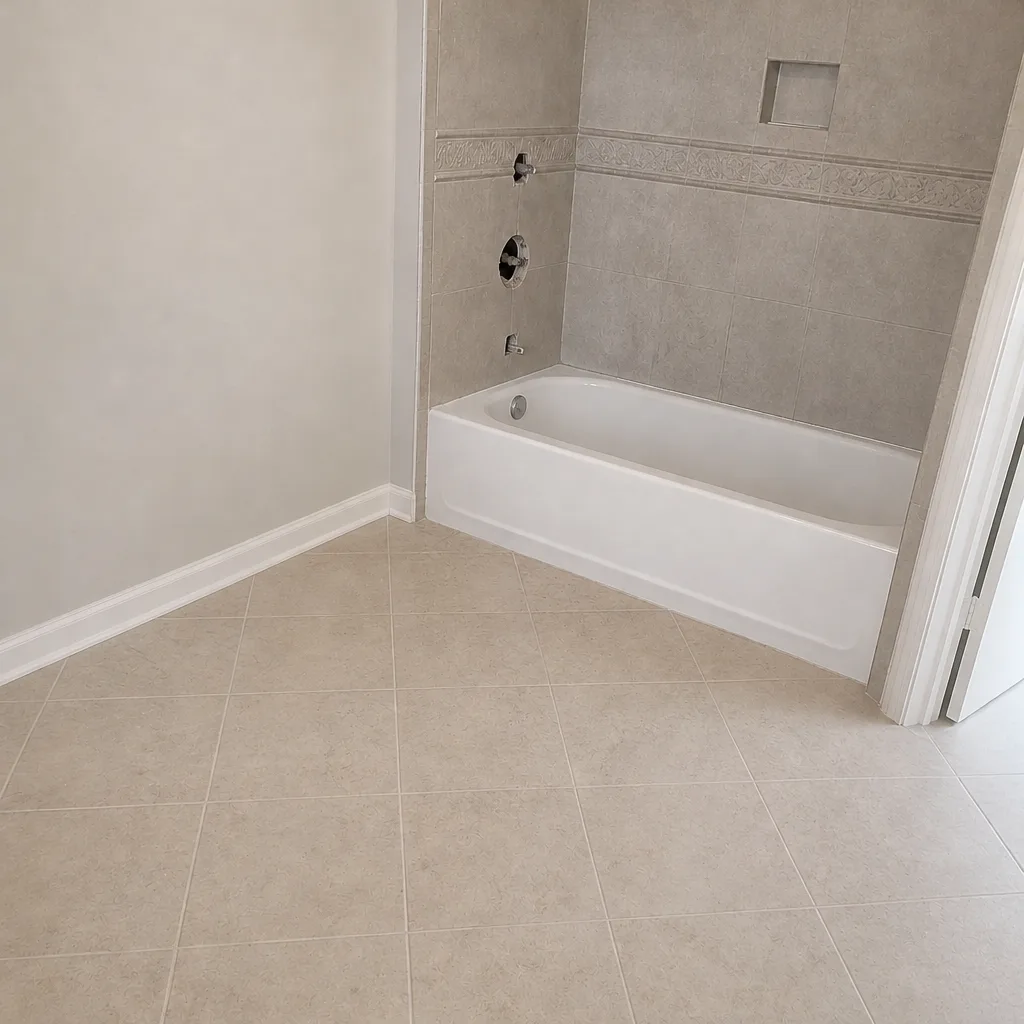
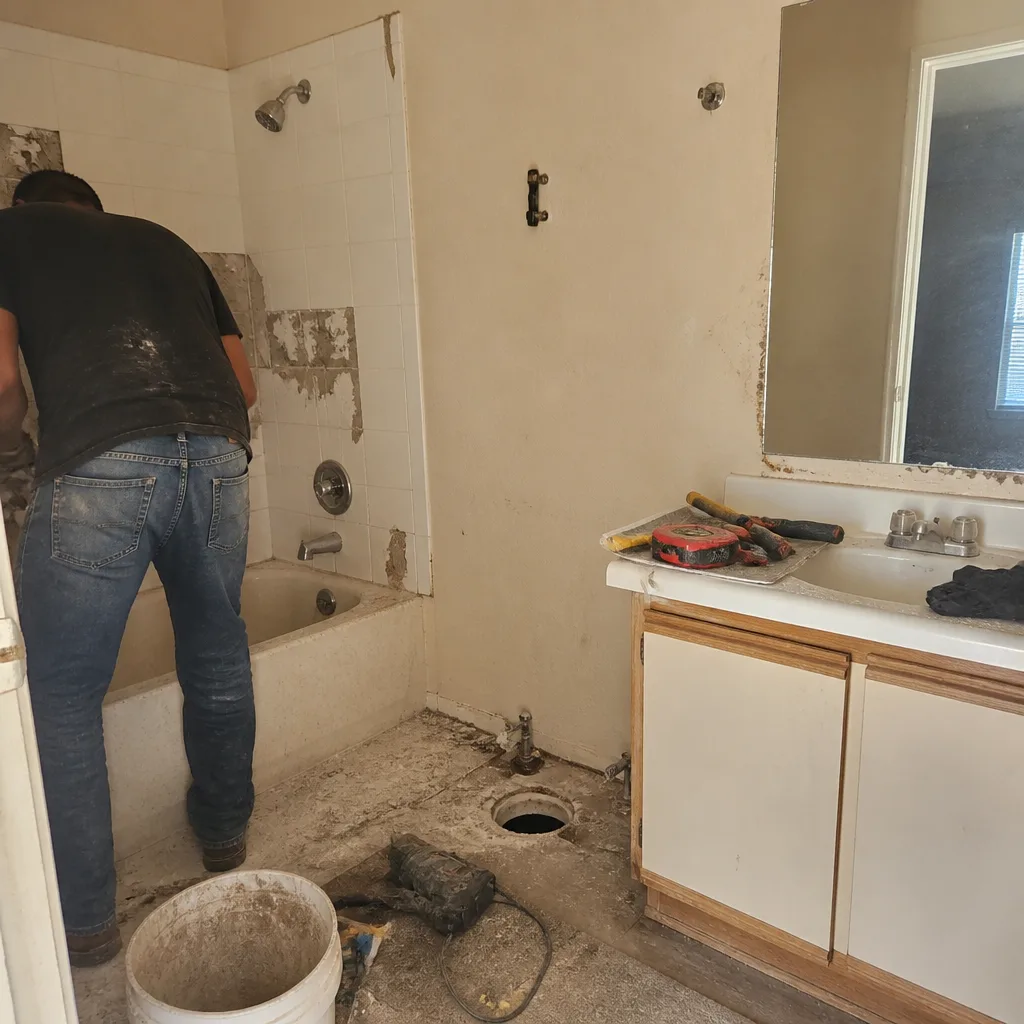
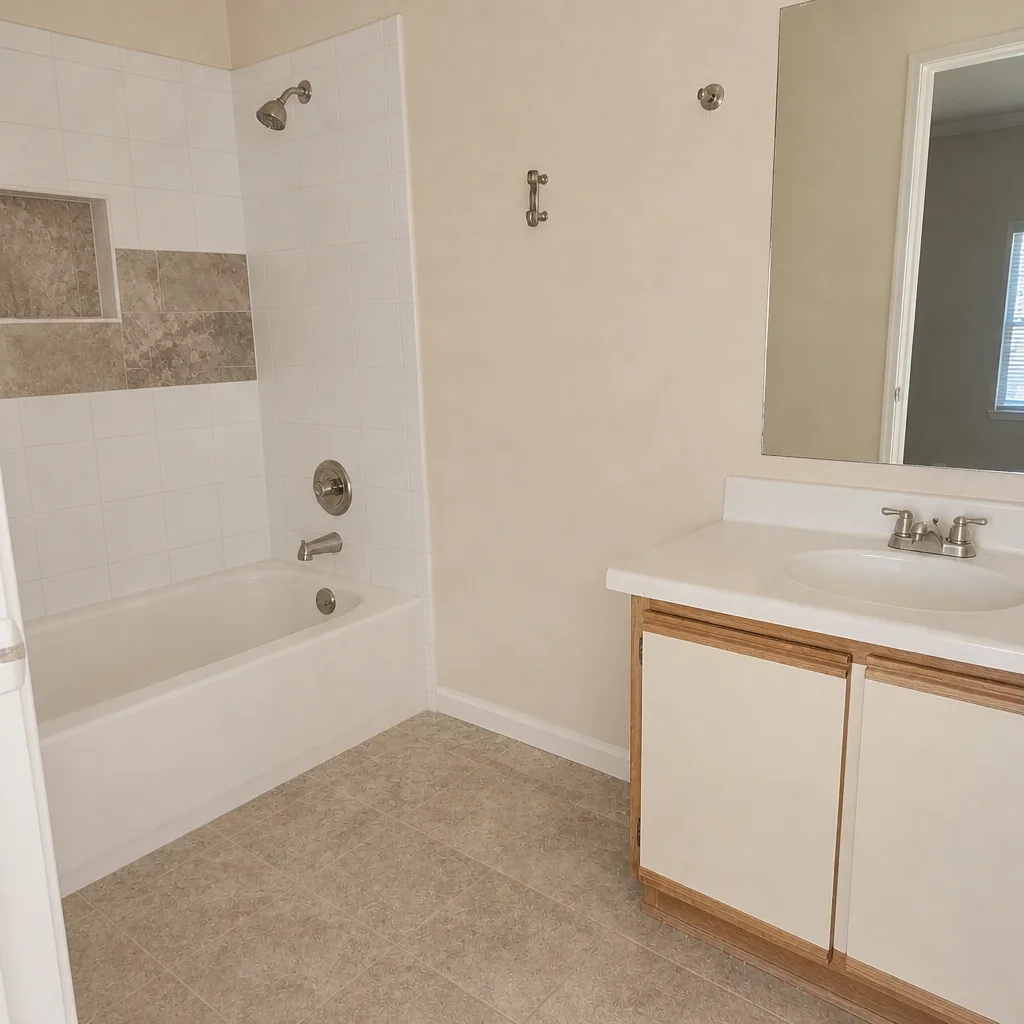
See the difference
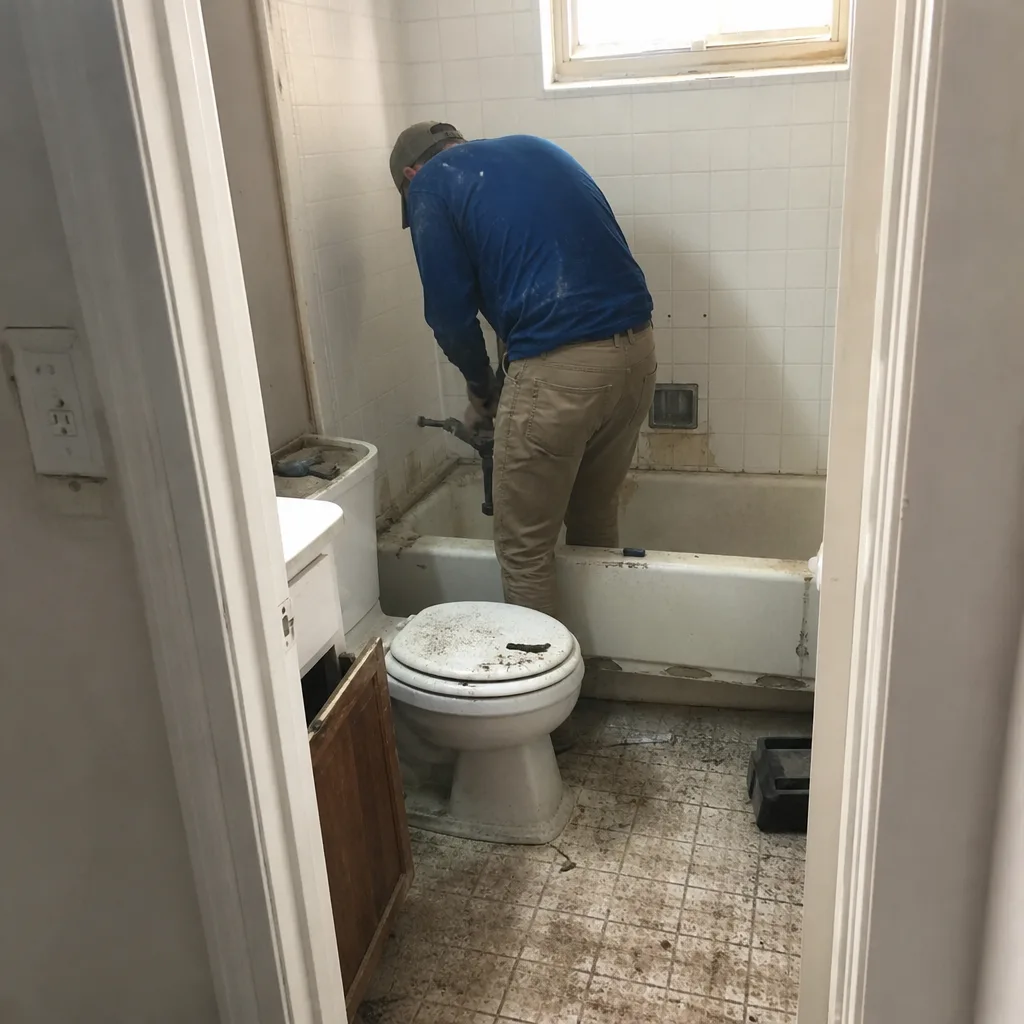 Before
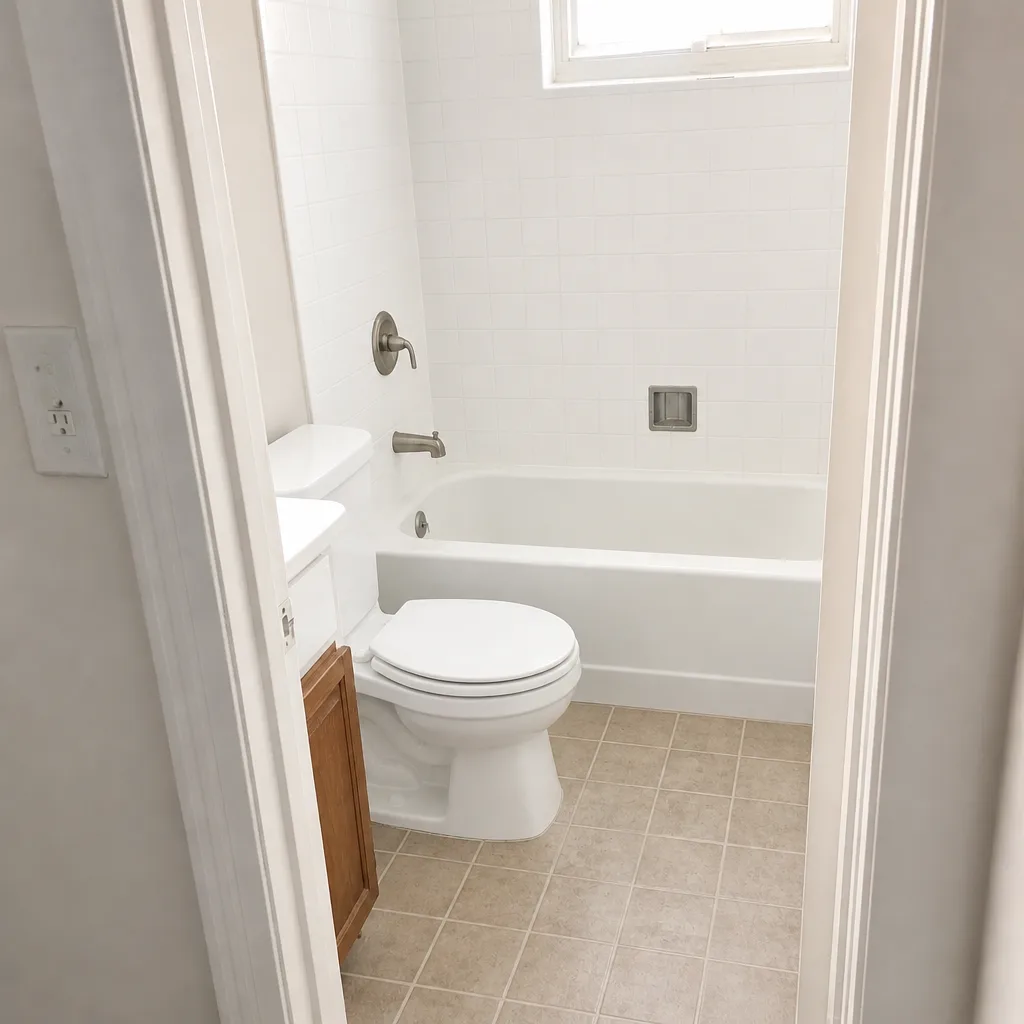 After
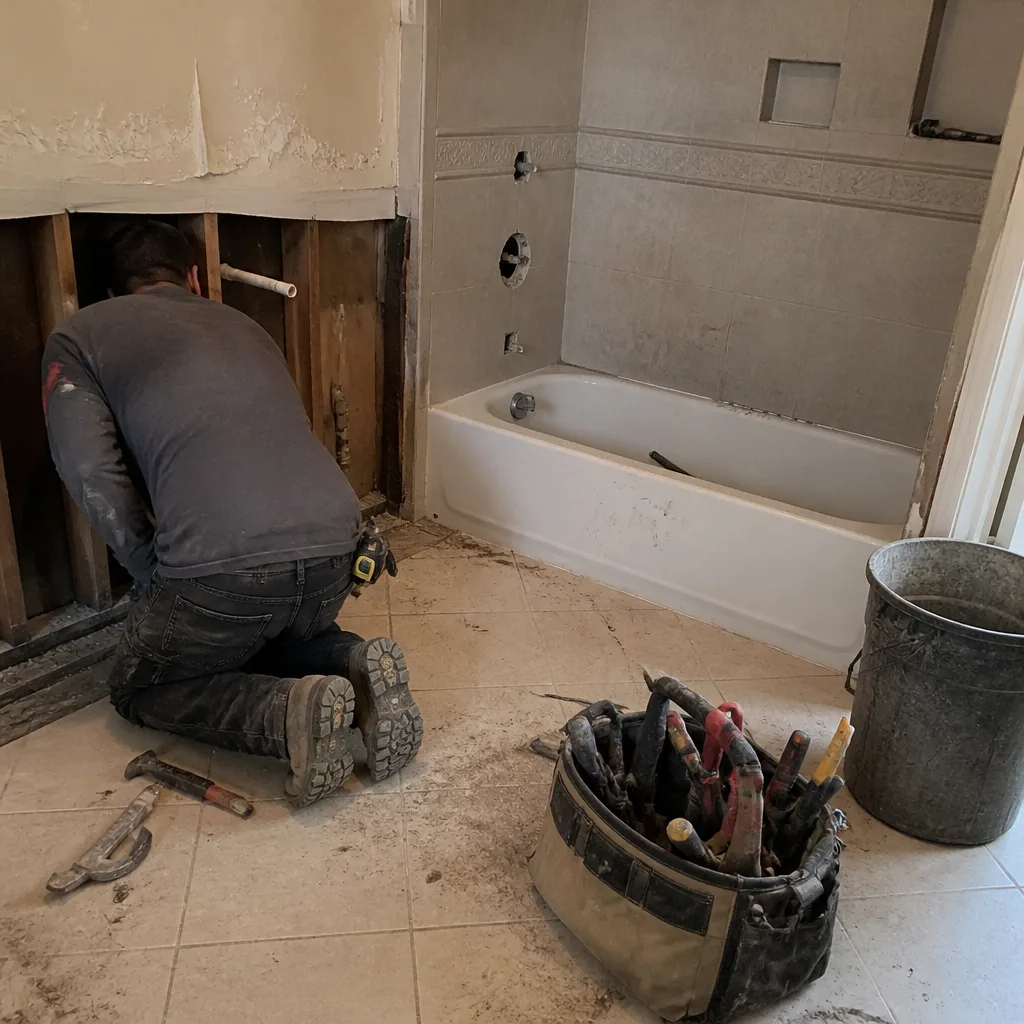 Before
 After
 Before
 After
Frequently Asked Questions
Henderson’s hard water deposits calcium and magnesium into porous cement grout, which stains it and dulls the color over time. The fix is epoxy grout or a penetrating sealer rated for high-mineral water, reapplied on schedule. If the grout is already hazy, the failed sealer needs to be removed and replaced, not recoated. Call (833) 954-6011 for a free estimate.
It depends on the pattern. A crack running in a straight line across the floor, or following the edge of a subfloor seam, usually indicates substrate deflection and is a legitimate warranty callback. Random pinhole cracks after several years are normal wear. Reputable remodelers will inspect and advise; call (833) 954-6011 to schedule a free assessment.
Do a simple fill test: block the drain, add an inch of water to the pan, and watch the ceiling below for several hours. If water appears, the leak is at the pan or curb. If nothing appears, the problem is in the plumbing or behind the tile wall. Either way, don’t wait; call (833) 954-6011 for a free estimate.
Yes, indoors. The outdoor dry desert air doesn’t prevent mold; the moisture comes from long hot showers and an undersized exhaust fan can’t clear it. Tightly built homes trap it further. If mirrors fog and stay fogged, or paint is peeling near the ceiling, the fan or its ducting is the problem. Call (833) 954-6011 for a free estimate.
No. Caulk over caulk traps moisture and looks worse within months. The old caulk has to be removed fully, the joint cleaned and dried, and then 100% silicone caulk applied. If the joint is already wet behind the caulk, the tile edge may need opening to dry first. Our technicians have up to 10 years of experience with this; call (833) 954-6011 to schedule a free estimate.
Start with a bathroom-only remodeler who specifies the waterproofing system, grout type, and fan capacity in the written estimate. In Henderson’s water and heat, those three details determine whether the bathroom looks good in year one or year ten. A tub-to-shower conversion or walk-in shower install done right follows the same rule. Call (833) 954-6011 for a free estimate with a written line-item quote.
The Bottom Line
Bathroom remodeling problems in Henderson almost always come down to hard water, heat movement, or ventilation, and each has a specific fix. Epoxy grout and silicone caulk beat the water. Substrate prep and movement joints beat the temperature swings. A correctly sized, properly ducted exhaust fan beats the moisture. If you take one thing from this guide, take this: the difference between a bathroom that holds up and one that doesn’t is in the details of the spec, not the surface finish. A specialist plans those details before the tile goes up. Call (833) 954-6011 for a free estimate. We answer 24/7, with fast dispatch from 7am to 7pm, Sunday through Friday.
Written by the team at Bathroom Remodeling Henderson.